Your Parent Says, “I’m Fine.” Is That True? Four Tips for Adult Children
A practical guide for adult children and caregivers who can see something coming but aren’t sure what to do next.
They told you the ER visit was “nothing.” They said they’re managing fine on their own. They changed the subject when you asked about the bruise on their arm.
And you drove home three hours later knowing something has changed, but you’re not sure what to do with that knowledge.
If this is familiar, you’re in good company. Adult children across the country are navigating exactly this moment: somewhere between “I think they need help” and “I have no idea what’s available or who pays for it.”
This post is for you. Not a deep dive, just four things worth knowing right now, before you need to know them urgently.
Home Care is not one thing – and the difference matters to who pays.
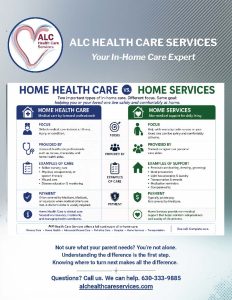
In-Home Care Infographic
The most common and costly mistake families make is assuming Medicare covers all in-home care broadly. It doesn’t.
- Medicare covers home health: skilled clinical care such as nursing visits, physical therapy, and wound care when a doctor orders it and specific qualifying criteria are met. It’s covered at 100% with no copay when you qualify.
- Medicare does not cover home care: the daily personal assistance your parent may need most – help with bathing, dressing, meals, housekeeping, and medication reminders. That’s generally private pay, unless Medicaid or long-term care insurance applies.
Knowing this distinction early lets you plan. It means you can arrange Medicare-covered skilled care for clinical needs, while making separate decisions about personal care support, rather than discovering at the worst possible moment that the $4,000/month aide service isn’t covered.
The emergency room cycle is not inevitable, but caregivers need proactive help to prevent it.
Here’s a pattern that plays out thousands of times a day across the country: an older adult with multiple chronic conditions such as heart failure, diabetes, or COPD doesn’t have a consistent clinical relationship that can come to them. A condition worsens quietly. Then suddenly it doesn’t feel quiet anymore, and someone calls 911.
The ER treats the crisis. The chronic condition goes home with the patient, unmanaged, ready to trigger the next one. And the family caregiver absorbs the terror of each cycle.
Research is clear that greater continuity of primary care, especially care that comes to the patient, reduces emergency department admissions in older adults with complex conditions. In-home primary care isn’t a luxury service. For someone who can’t easily get to a clinic, it may be the single most effective thing a family can put in place.
It’s also one of the most practical: no transportation logistics, no waiting rooms, no exhausting half-days reorganized around a 20-minute appointment.
How do you get this kind of in-home care? Ask for home-based primary care, home-based medical care, or simply, house calls.
Palliative care is not what you think it is; most families find out too late.
Ask most people what palliative care means and they’ll say: that’s for people who are dying. That misunderstanding keeps families away from one of the most powerful support systems available to them.
Palliative care is specialized support – symptom management, care coordination, emotional support for patients and families – for anyone living with a serious chronic illness. It does not require a terminal diagnosis. It can happen alongside curative treatment. And it’s covered by Medicare.
If your parent is managing significant symptoms from a serious condition such as pain, breathlessness, fatigue, side effects from treatment, and those symptoms are affecting daily life and your peace of mind, palliative care in the home is a conversation worth having now. Not later.
The hardest conversation – even for adult children – is rarely as hard as dreading it.
Most older adults don’t resist help because they’re stubborn. They resist it because they’re afraid. They’re afraid of losing independence, of being a burden, of what the conversation might mean about the future.
The families who navigate this most successfully tend to approach it from curiosity rather than conclusion. Not “we need to talk about your care,” but “I’ve been thinking about you a lot and I want to understand how things actually feel from your end.” It’s a difficult transition; one day you’re a kid, the next you’re one of millions of adult children caring for an aging parent.
Start there. Let the conversation lead. And know that you don’t have to have a plan before you start talking. The plan comes from the conversation.
Want the full picture?
We’ve put together a comprehensive guide, The Caregiver’s Guide to Home-Based Care: What’s Available, What It Costs, and What Medicare Covers, that goes deeper on all of this. It covers every service line in plain language, walks through Medicare and Medicaid coverage in real terms, addresses Veterans benefits, and includes the questions you should ask any home care provider before you sign anything.
It’s free. No sales pitch inside. Just the information families in this situation actually need.
Download The Caregiver’s Guide at alchealthcareservices.com
ALC Health Care Services offers a full continuum of in-home care across the greater Chicagoland area – Primary Care, Home Health, Advanced Wound Care, Palliative Care, Hospice, ALC Home Services, and Transportation. One call. Complete care.
alchealthcareservices.com