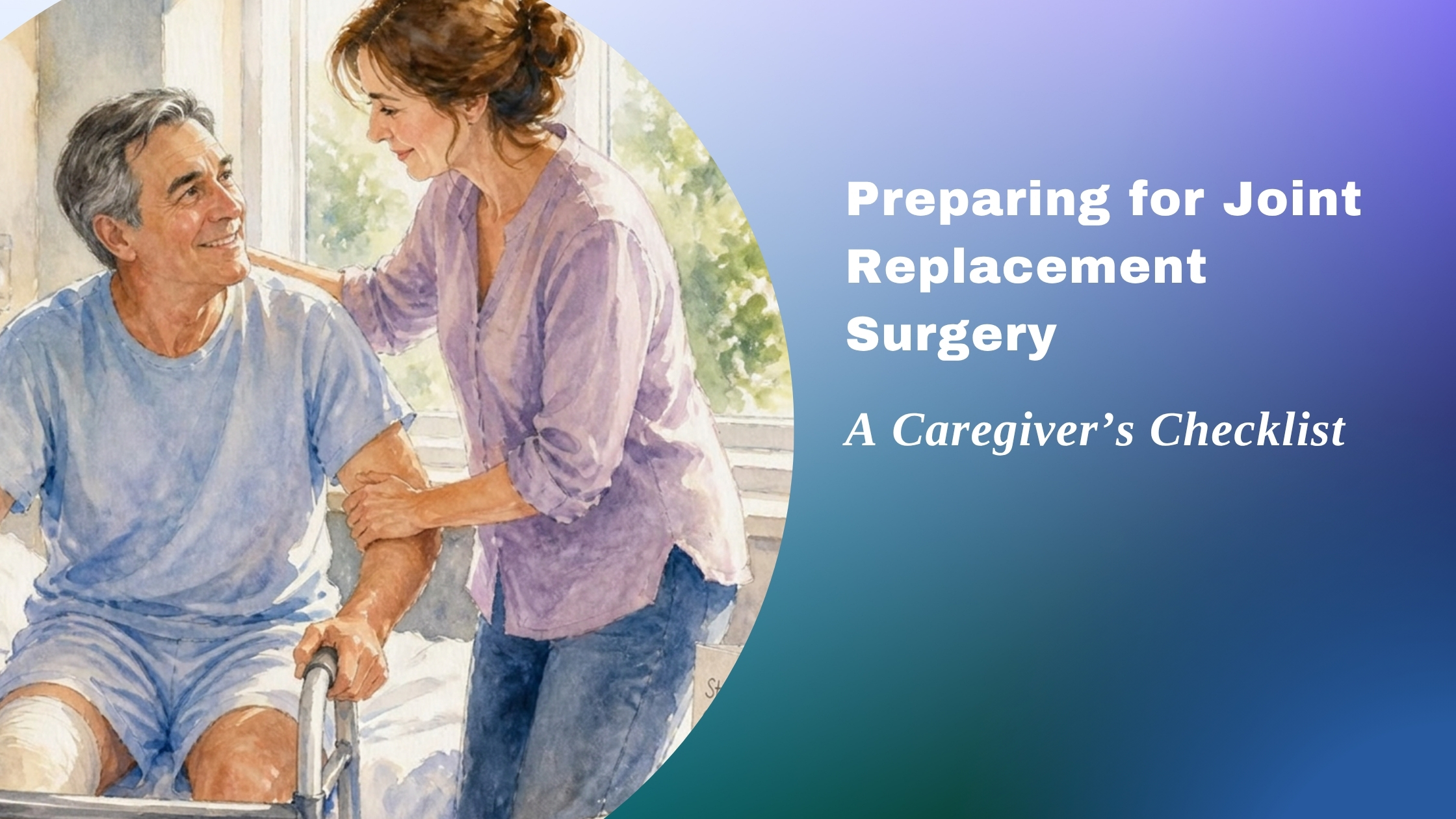
Preparing for Joint Replacement: A Caregiver’s Pre-Surgery Checklist
Hip and knee replacements are among the most common, and successful, surgeries performed today. For many older adults, they offer the opportunity to regain mobility, reduce pain, and return to the activities they enjoy.
While patients often spend weeks preparing for surgery, caregivers are frequently surprised by what happens after the hospital stay. Recovery isn’t just about healing an incision. It’s about safely navigating everyday life during the weeks that follow.
Whether you’re caring for a spouse, parent, family member, or friend, a little planning before surgery can make recovery smoother, safer, and less stressful for everyone.
Will Someone Be Home?
Most patients need assistance during the first several days – and often the first few weeks – after returning home.
Even if they’re walking with a walker or cane, they may need help with:
- Getting in and out of bed or a chair
- Preparing meals
- Taking medications
- Bathing and dressing
- Laundry and light housekeeping
- Grocery shopping or running errands
If family members won’t be available consistently, consider arranging private-duty caregiving services before surgery rather than waiting until you’re overwhelmed.
Is the Home Ready?
A few simple changes can reduce the risk of falls and make recovery much easier.
Before surgery:
- Remove throw rugs and electrical cords from walkways.
- Improve lighting throughout the home.
- Place frequently used items within easy reach.
- Install grab bars or obtain a shower chair if recommended.
- Make sure there is a sturdy chair with arms for sitting and standing.
- Stock the refrigerator and pantry with easy-to-prepare meals.
Preparing the home ahead of time allows everyone to focus on healing instead of scrambling after discharge.
Living in a Senior Living Community? Let the Staff Know.
If the patient lives in an independent living or assisted living community, notify the community before surgery. 
Many communities can help coordinate services such as:
- Transportation
- Meal delivery
- Wellness checks
- Medication reminders
- Therapy scheduling
- Building access for home health providers
Every community offers different levels of support, so ask what services are available and what arrangements should be made before surgery.
Will Home Health Be Enough?
This is one of the most common misconceptions families have.
Home health services provide skilled medical care such as nursing visits, wound care, physical therapy, and occupational therapy. These services are essential, but they are intermittent and designed to meet specific medical needs.
Patients often still need help with everyday activities between those visits, including:
- Bathing
- Dressing
- Meal preparation
- Light housekeeping
- Laundry
- Companionship
- Transportation
Private-duty caregivers can provide this non-medical support, allowing family members to step away when needed while knowing their loved one is safe.
Plan Ahead for Transportation
Recovery doesn’t end when the patient arrives home.
There will likely be follow-up appointments, physical therapy sessions, trips to the pharmacy, and other medical visits. If family members aren’t available to drive, make transportation arrangements before surgery.
Having a plan in place reduces stress and helps ensure appointments aren’t delayed.
Remember the Caregiver
Caregivers often focus entirely on the person having surgery and forget about their own well-being.
Accept offers of help from family and friends. Schedule breaks when possible. Ask questions before surgery instead of waiting until challenges arise.
Taking care of yourself isn’t selfish; it’s one of the best ways to ensure you can continue caring for someone else.
A Little Planning Goes a Long Way
The goal isn’t simply to recover from surgery, it’s to recover safely, comfortably, and with confidence.
Planning ahead gives patients the support they need and gives caregivers the peace of mind that comes from knowing they’re prepared for whatever recovery brings.
Pre-Surgery Caregiver Checklist
Before Surgery
☐ Confirm the surgery date and expected discharge plan.
☐ Ask the surgeon what level of assistance will be needed during the first two weeks.
☐ Arrange for someone to stay with the patient after discharge, if needed.
☐ Notify your senior living community about the upcoming surgery.
☐ Ask what services the community can provide during recovery.
☐ Confirm whether home health services have been ordered.
☐ Decide whether private-duty caregiving would be beneficial.
☐ Remove fall hazards from the home.
☐ Install or obtain recommended safety equipment.
☐ Prepare meals or stock the freezer with easy-to-reheat foods.
☐ Fill prescriptions before surgery whenever possible.
☐ Arrange transportation for follow-up appointments and therapy.
☐ Keep important phone numbers and emergency contacts together.
☐ Make a plan so the caregiver can take occasional breaks.
Download the full Caregiver Pre-Surgery Checklist.
Need Extra Support During Recovery?
Recovering from joint replacement is easier when the right support is in place. Whether you need skilled home health services, assistance with daily activities, transportation to medical appointments, or simply an extra set of caring hands, planning ahead allows everyone to focus on what matters most—healing.
ALC Health Care Services provides a full continuum of care designed to support patients and families through every stage of recovery.